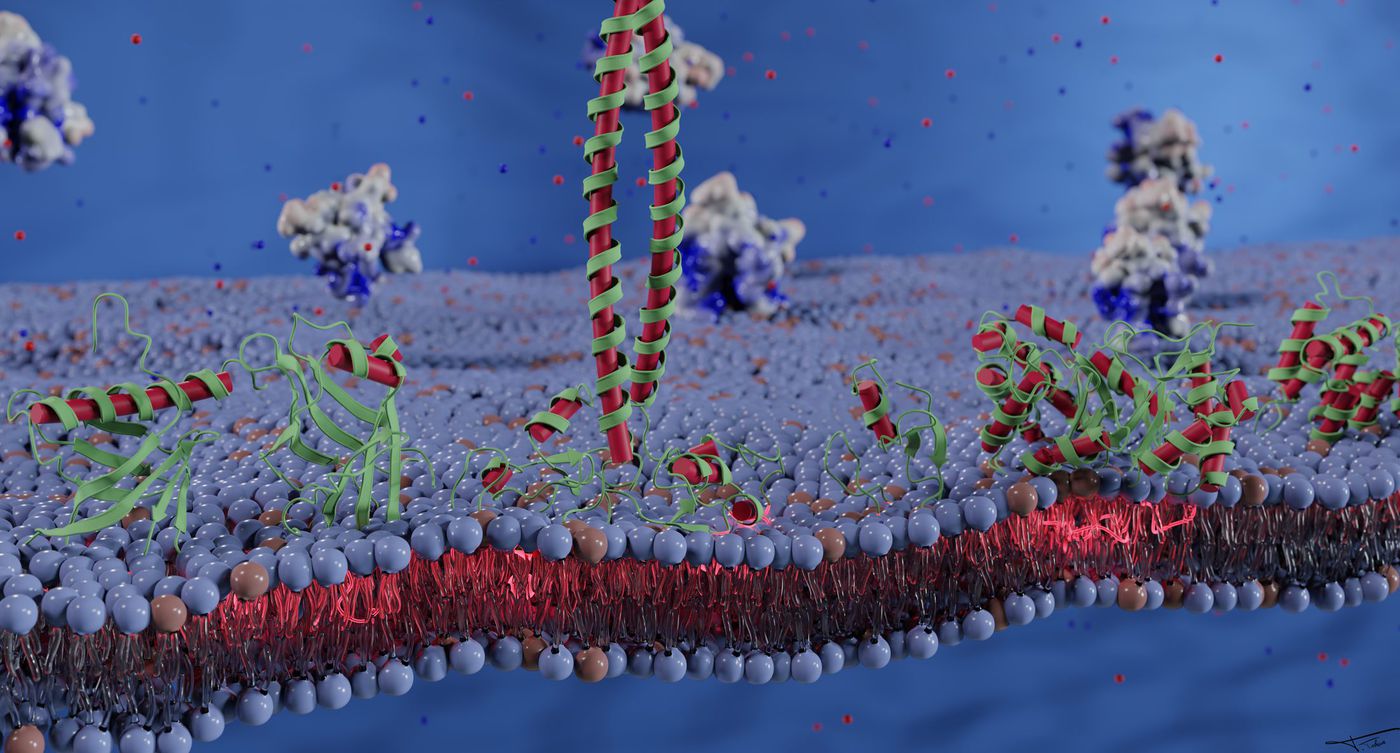
A curated, structure-derived dataset mapping which amino acids actually sit at membrane-binding interfaces, across hundreds of proteins.
My postdoctoral research focused on characterizing the amino acids found at the membrane-binding interfaces of peripheral membrane proteins, with the aim of refining existing models of how these proteins associate with membranes. These proteins play important roles in processes such as lipid metabolism and membrane remodeling, yet their binding sites are more diverse than the traditional picture of interfaces rich in basic and hydrophobic residues suggests. The project was conducted in Professor Nathalie Reuter’s group at the University of Bergen.
I developed an automated workflow and a carefully curated dataset of peripheral membrane proteins from several protein superfamilies with known membrane-binding sites. By combining experimentally determined structures with AlphaFold models, I compared each protein’s binding interface with its non-binding surface and analyzed structural features including solvent accessibility, secondary structure, and hydrophobic protrusions—exposed residues that may help a protein engage with a membrane. The dataset is publicly available and can support further studies and the development of machine-learning methods for predicting membrane-binding sites.
Statistical analyses revealed that membrane-binding interfaces vary across protein families and are not defined by hydrophobic protrusions alone. Aromatic residues were enriched among interface protrusions, while lysine was especially prominent among positively charged residues. The results also highlighted the potential importance of tryptophan and glycine at binding interfaces, suggesting roles for membrane interactions and local flexibility. Together, these findings provide a more detailed picture of peripheral protein–membrane recognition and may help improve both predictive models and computational descriptions of membrane binding.
The work contributed to a peer-reviewed study on peripheral protein–membrane interfaces and a review of computational membrane models. It also supported the creation of an online tool for visualizing hydrophobic protrusions on protein structures.
Prof. Nathalie Reuter (University of Bergen) · Dr. Ian Sillitoe & Prof. Christine Orengo (UCL, CATH)